Sanitation Library
Total results: 4466
Searching for information on Sanitation Workers?
The Sanitation Workers Knowledge + Learning Hub is the best source for all current news, trends, articles and updates on sanitation workers rights around the world.
2444 Views
85 Downloads
On July 16th 2015, flash floods triggered by Glacial Lake Outburst Floods (GLOF) submerged various parts of the Chitral District; the northern district of Pakistan, bordering Afghanistan. The floods destroyed houses, livestock and public infrastructure. The disaster claimed three lives and left 250,000 people without access to basic services and relief supplies. More than 60% of households were …
2591 Views
85 Downloads
Worldwide over the last years, a shift has taken place in the acceptance of faecal sludge management (FSM). It is now considered by many to be a viable solution alongside sewer-based systems in achieving citywide inclusive sanitation, and faecal sludge treatment plants (FSTPs) are starting to be constructed throughout Asia and Africa. For example, more than 40 FSTPs started operation in India and …
1845 Views
85 Downloads
WHO’s 13th General Programme of Work (GPW) 2019–2023 describes how the Organization’s work will contribute to the health of three billion: one billion becoming “healthier populations” through multisectoral actions and addressing environmental risk factors and health determinants; one billion benefiting from better emergency preparedness and response; and one billion with universal …
5148 Views
85 Downloads
This library entry contains background documents for a grant that Daniel Okello (Phase 1) and Najib B. Lukooya (Phase 2) are leading and which is funded by the Bill and Melinda Gates Foundation.
Further information is also available on the SuSanA discussion forum, see link below.
1435 Views
84 Downloads
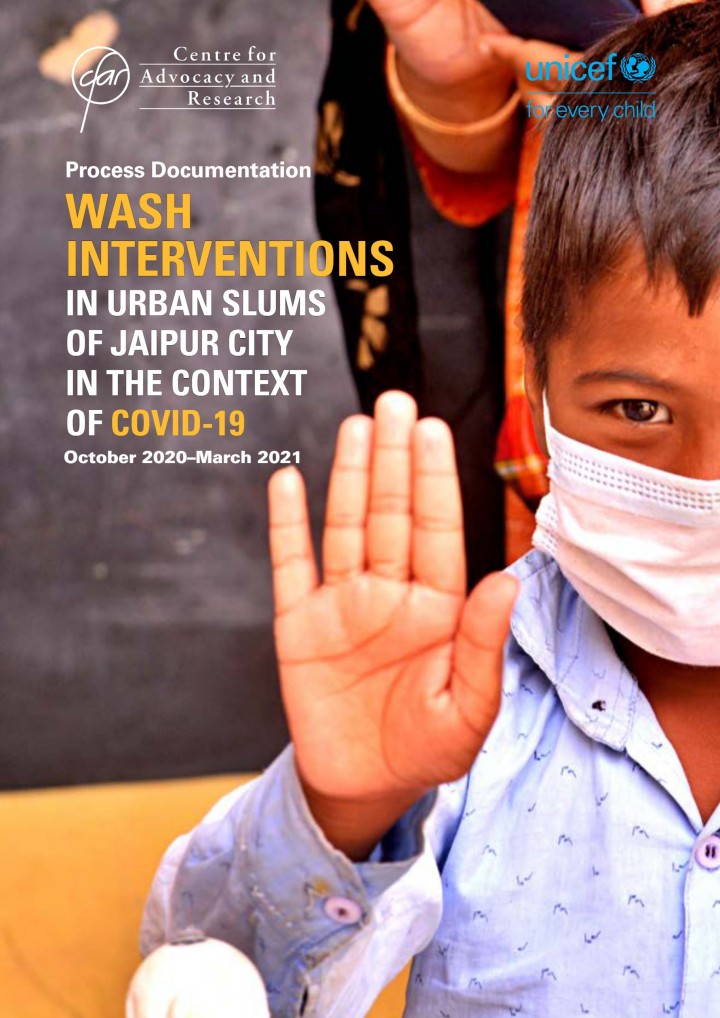
IN 2020, UNICEF initiated WASH interventions in the urban slums of Jaipur city in partnership with the Centre for Advocacy and Research (CFAR). This was done in the context of the 2019 coronavirus (COVID-19) pandemic with a threefold objective. COVID-19 has highlighted the inter-linkages between health and hygiene and the vulnerability of the poor and the marginalized. As India battled with the …
1919 Views
84 Downloads
Sanitation for Millions is a multi-donor programme set up in 2016 to contribute to safe and adequate access to sanitation. It considers the entire sanitation chain and applies sustainability criteria to ensure long-lasting results in line with the Sustainable Development Goals, in particular SDGs 6, 4 and 3. The programme operates worldwide, focusing notably on the needs of disadvantaged and …
1713 Views
84 Downloads
This study investigated the effectiveness of Water Safety Plans (WSP) implemented in 99 water supply systems across 12 countries in the Asia-Pacific region. An impact assessment methodology including 36 indicators was developed based on a conceptual framework proposed by the Center for Disease Control (CDC) and before/after data were collected between November 2014 and June 2016. WSPs were …
8615 Views
84 Downloads
This report presents for the first time a multi-country review of water, sanitation and hygiene (WASH) services in health care facilities in 54 low- and middle-income countries. WASH services provide for water availability and quality, presence of sanitation facilities and availability of soap and water for handwashing. The main focus of the results is on water availability as there were very …
5433 Views
84 Downloads
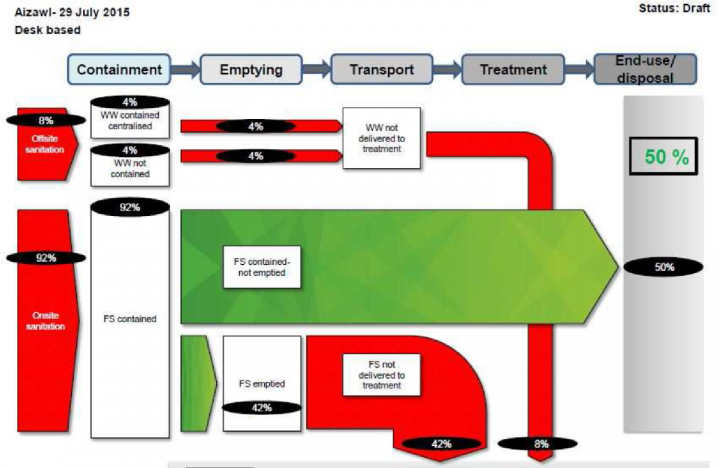
Aizawl is the capital of Mizoram State located in the east of the Himalayan region of India. The density of the city, 2,823 persons per sq. km, is higher compared to state average, 52 persons per sq. km. 92% of the city depend on onsite sanitation systems and 8% of the city on offsite systems. There is no wastewater treatment leading to unsafe management of faecal sludge and wastewater.
Date …