Sanitation Library
Total results: 4466
Searching for information on Sanitation Workers?
The Sanitation Workers Knowledge + Learning Hub is the best source for all current news, trends, articles and updates on sanitation workers rights around the world.
1751 Views
89 Downloads
In Bangladesh, on-site sanitation is prevalent throughout the country except for a small portion in Dhaka city, and the huge quantity of faecal sludge generated in septic tanks and pits (of pit/ pour-flush latrines) is inaptly managed. Lack of Faecal Sludge Management (FSM) services is causing severe environmental pollution, particularly in urban areas, affecting both public health and economy. …
1768 Views
89 Downloads
The sanitation situation in India has improved significantly in the last few years. This has been made possible by the foundation laid by various efforts - policies, programmes, investments and collaborations - over the years.
This publication aims at describing India’s urban sanitation journey and the contribution to it by the Indo-German Development Cooperation specially over the last ten …
1790 Views
89 Downloads
Soil and water conservation is a high priority in the drier areas of subSaharan Africa. Storage of water from the rainy season to the dry season, or even from wet years to dry years is highly important. Groundwater dams, which store water under the ground, can store sufficient quantities of water for livestock and minor irrigation as well as for domestic use. If sited and built properly, dams can …
1823 Views
89 Downloads
This report was compiled as part of the SFD Promotion Initiative project funded by the Bill and Melinda Gates Foundation (BMGF).
Chunar is situated on the banks of River Ganga and River Jargo, in the state of Uttar Pradesh, India. City lies in the Vidhyan Range, 42 km from the district headquarters, Mirzapur, and at a distance of 273 km from the state capital, Lucknow. The city gets its name …
2225 Views
89 Downloads
There is growing global momentum around addressing menstruation as an important health, education and gender equality issue. However, a critical barrier to making progress on addressing menstruation and the range of girls’ needs around this issue, is the lack of adequate validated measures related to measuring menstruation within global health and development. Measures are most needed that are …
2573 Views
89 Downloads
This toolkit provides step-by-step guidance to Neglected Tropical Disease (NTD) programme managers and partners on how to engage and work collaboratively with the WASH community to improve delivery of water, sanitation and hygiene services to underserved population affected by many neglected tropical diseases. The toolkit is based on real-life programme experience, which users can match to their …
4108 Views
89 Downloads
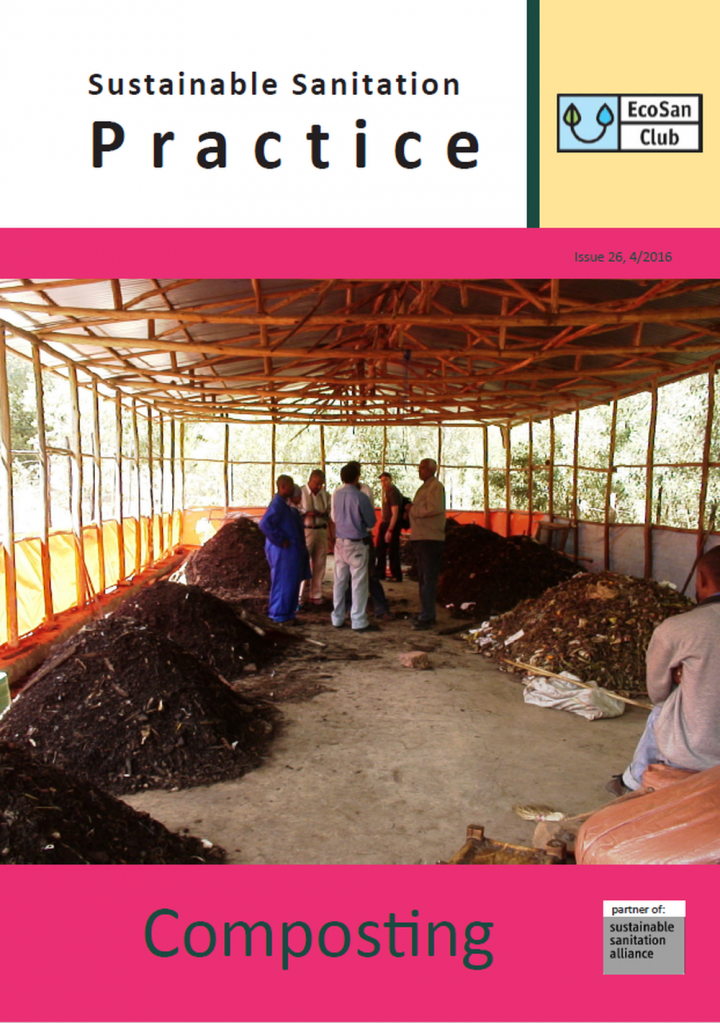
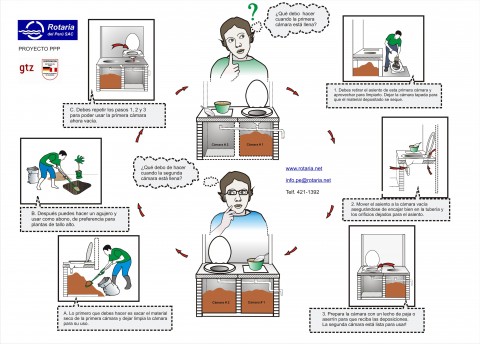
Besides sanitation, solid waste management plays an important role in improving the hygienic conditions in cities. There are several strong links between sanitation and solid waste management. In sanitation systems without sewers, urine, faecal matter and faecal sludge have to be collected from the single households such as solid waste. Faecal matter as well as sludge from wastewater treatment …
1479 Views
88 Downloads
Lakshmipur was originally a sub-division of Lakshmipur district and the municipality was established in 1976. The town stands on the bank of the Rahmatkhali and is located 137 km south-east of Dhaka. The city is sub divided into 12 wards and 22 mahallas. Lakshmipur is one of the 53 district-level municipalities in the country.
According to the population census in 2011 by the Bangladesh Bureau …
2628 Views
88 Downloads
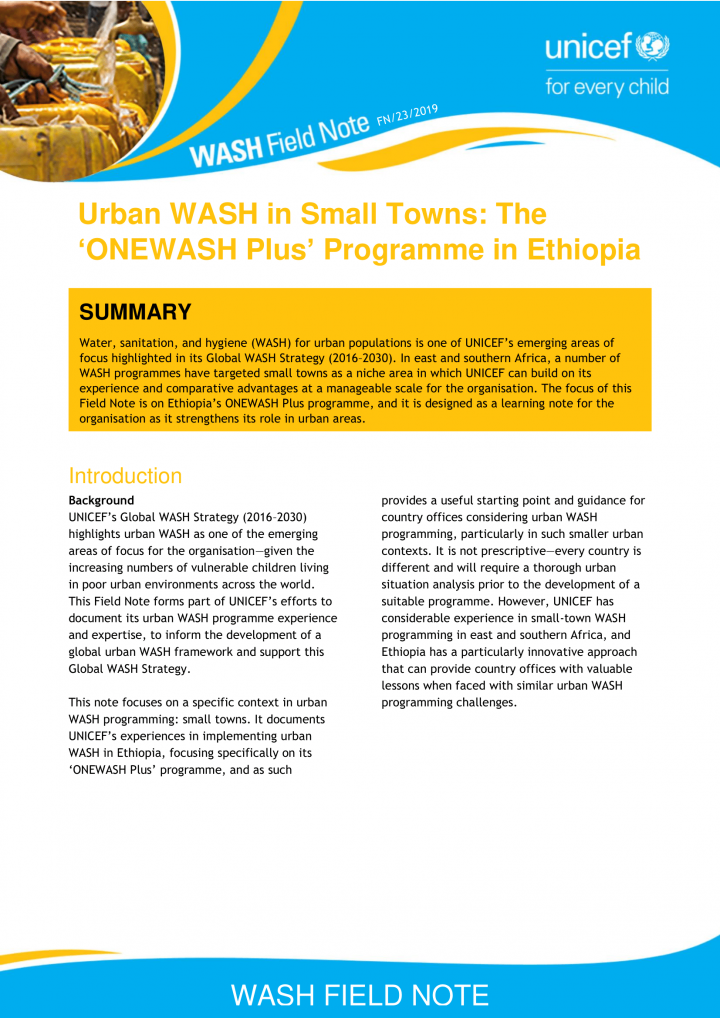
Water, sanitation, and hygiene (WASH) for urban populations is one of UNICEF’s emerging areas of focus highlighted in its Global WASH Strategy (2016–2030). In east and southern Africa, a number of WASH programmes have targeted small towns as a niche area in which UNICEF can build on its experience and comparative advantages at a manageable scale for the organisation. The focus of this Field …
2584 Views
88 Downloads
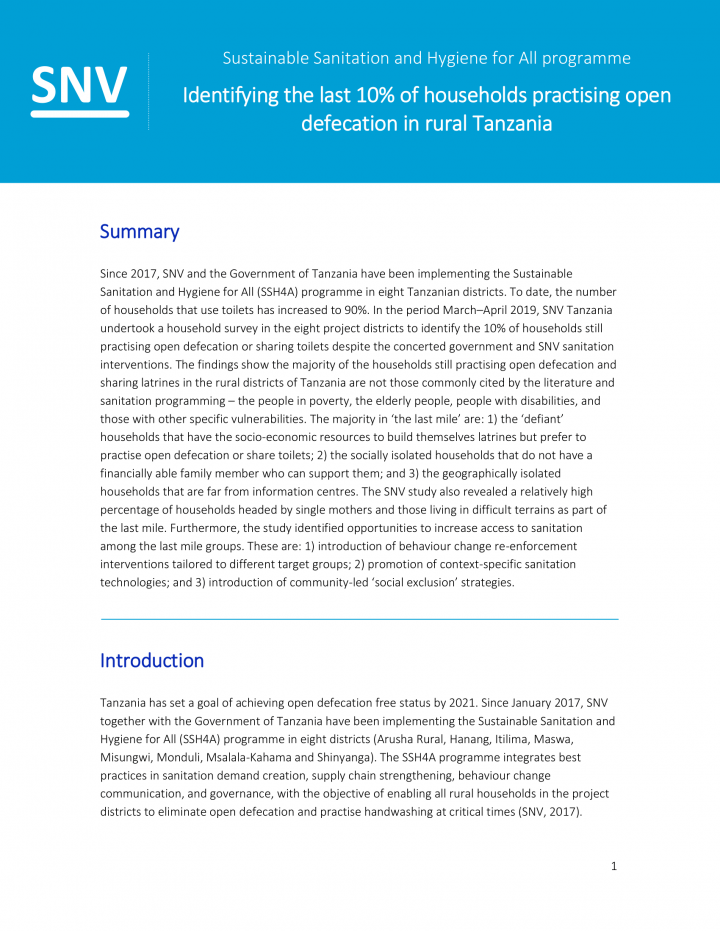
Since 2017, SNV and the Government of Tanzania have been implementing the Sustainable Sanitation and Hygiene for All (SSH4A) programme in eight Tanzanian districts. To date, the number of households that use toilets has increased to 90%. In the period March–April 2019, SNV Tanzania undertook a household survey in the eight project districts to identify the 10% of households still practising …
2641 Views
88 Downloads
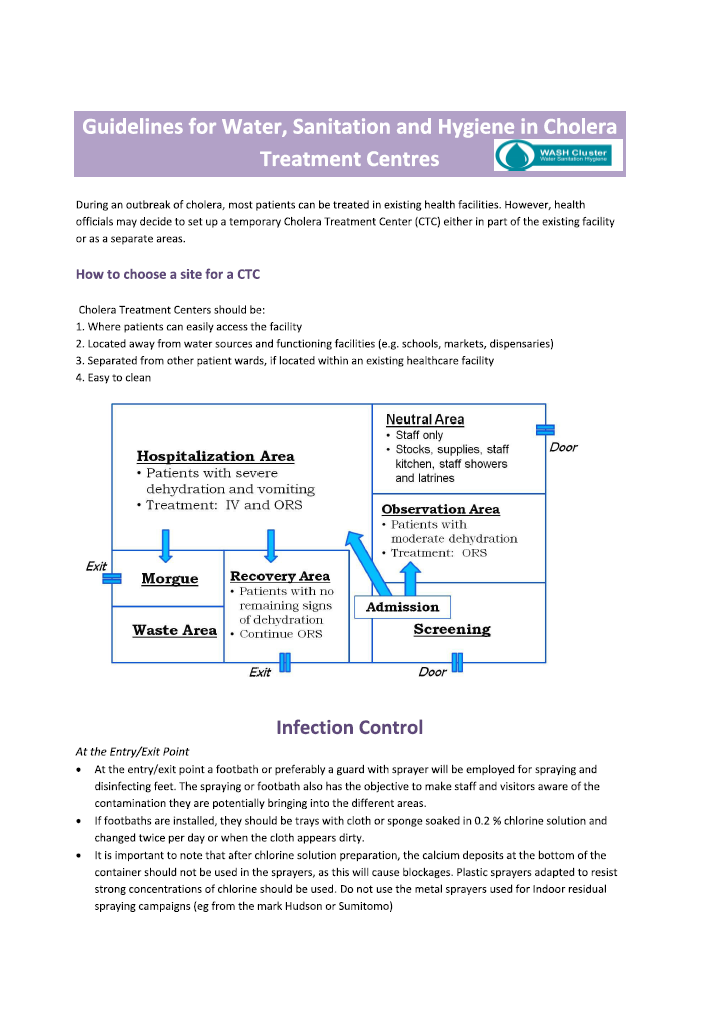
During an outbreak of cholera, most patients can be treated in existing health facilities. However, health officials may decide to set up a temporary Cholera Treatment Center (CTC) either in part of the existing facility or as a separate areas. This publication provides guidelines for water, sanitation and hygiene in CTC.

3919 Views
88 Downloads
The paper presents different aspects of the wastewater reuse practice in terms of formulation and choice of strategies and approaches, and the development and implementation of projects. Also, it presents international experience in the field, common drawbacks in Botswana and lessons to be learned. As an example, the results of a study of an existing institutional wastewater reuse plant (at …
4985 Views
88 Downloads
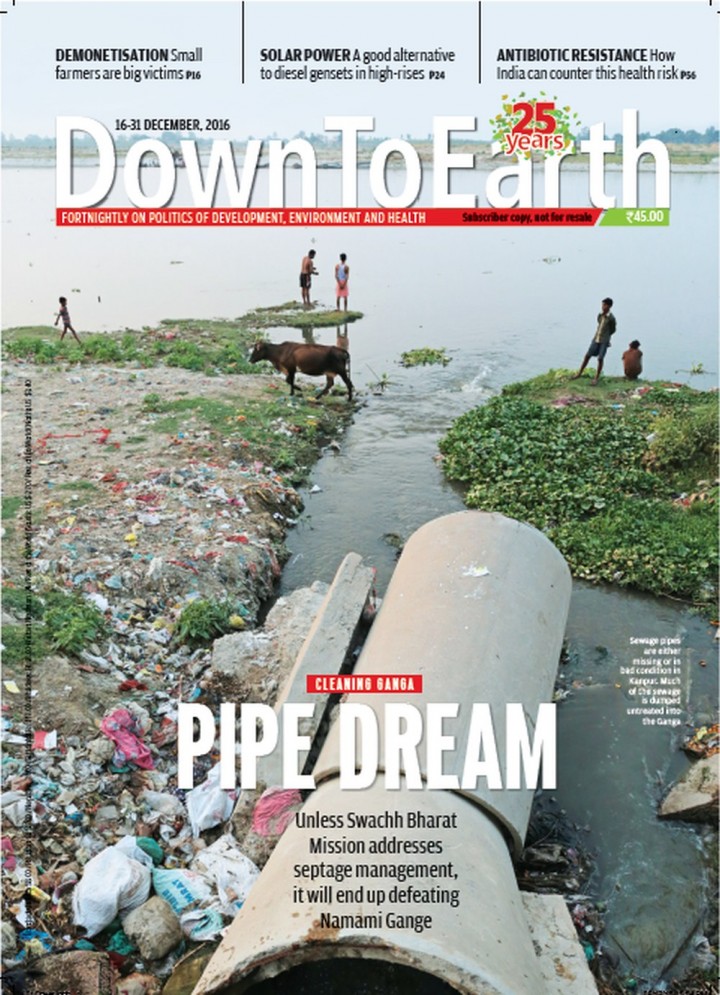
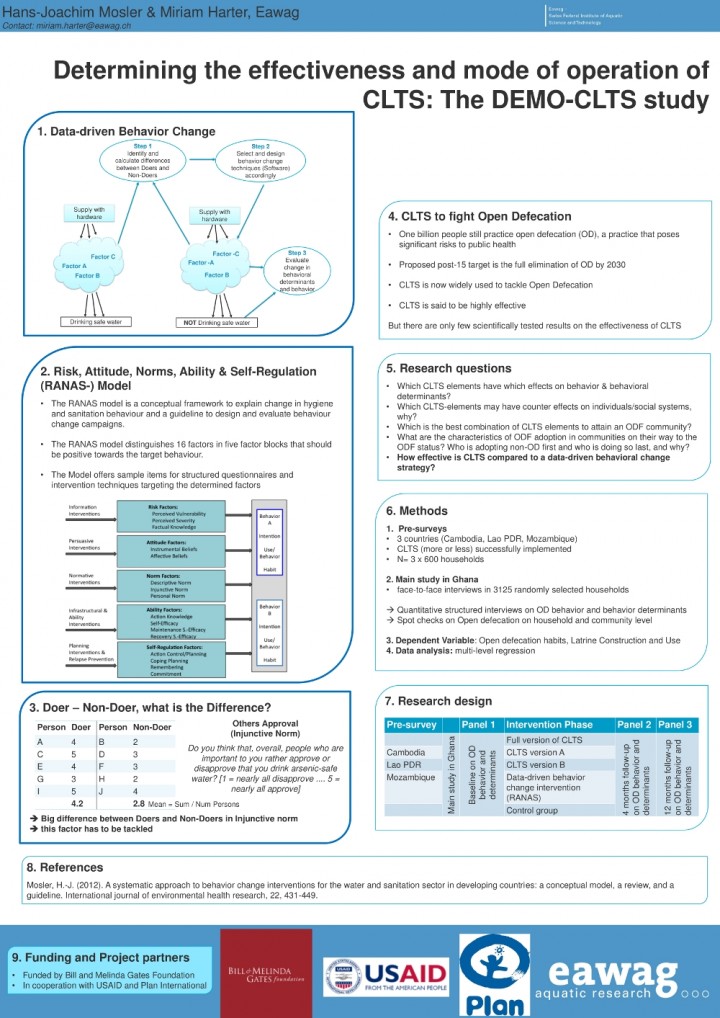
Two flagship programmes of Prime Minister Narendra Modi are working at cross-purposes. By 2019, when Swachh Bharat Mission comes to an end, some 30 million septic tanks and pits would have been dug along the Ganga. These tanks and pits would produce 180 Million litres of faecal sludge every day, which will eventually find its way into the Ganga, defeating Namami Gange. It's time the Central, …
4954 Views
88 Downloads
This document UN-Water provides a summary on discrimination and inequality in the field of water and sanitation: it explains the concept of discrimination, details the human rights in regarding equity in the WASH sector and presents the course of action towards the elimination of discrimination and inequality.
4774 Views
88 Downloads
In Issue 21 of SSP we present three papers on „Sludge treatment“, i.e. presented:
• In the first paper we describe the new sludge treatment line that is currently implemented at the Vienna main
wastewater treatment plant (the contribution summarises public available material),
• Markus Lechner describes the design of the first sludge drying reed bed in Montenegro, and
• Magdalena …
4950 Views
88 Downloads
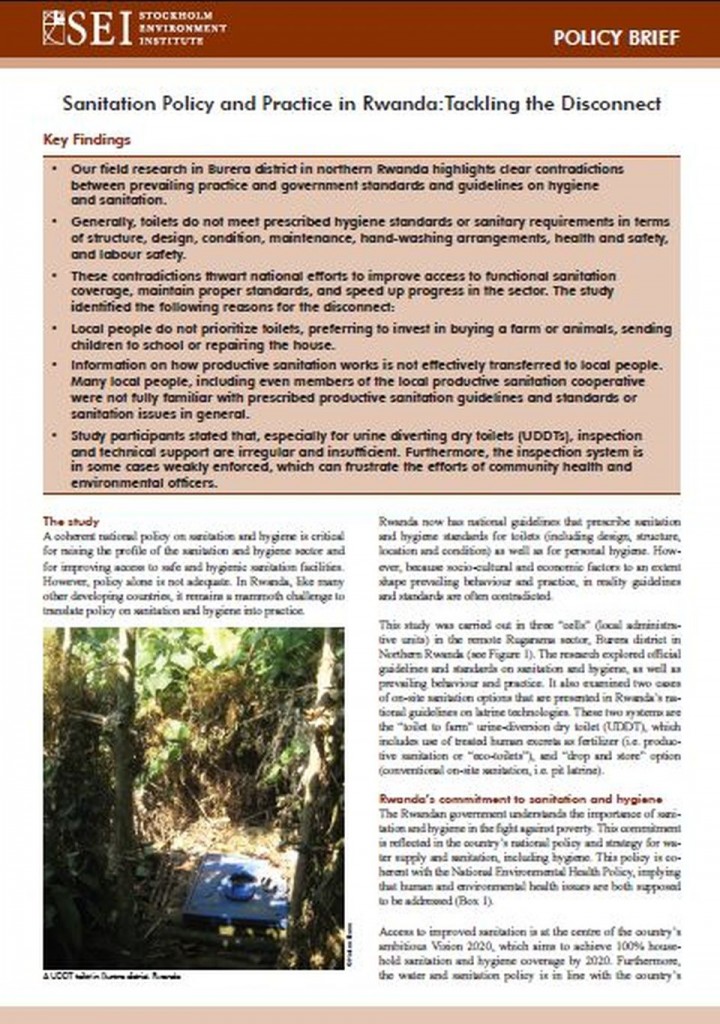
A coherent national policy on sanitation and hygiene is critical for raising the profile of the sanitation and hygiene sector and for improving access to safe and hygienic sanitation facilities. However, policy alone is not adequate. In Rwanda, like many other developing countries, it remains a mammoth challenge to translate policy on sanitation and hygiene into practice.