Sanitation Library
Total results: 4466
Searching for information on Sanitation Workers?
The Sanitation Workers Knowledge + Learning Hub is the best source for all current news, trends, articles and updates on sanitation workers rights around the world.

5191 Views
80 Downloads
(31st WEDC International Conference, Kampala, Uganda, 200)
Kabul water and environmental sanitation services have been affected by war, which ravaged large portions of the city in the early 1990’s. After the fall of the Taliban in 2002, a considerable influx of returnees contributed to put an ever greater stress on already deficient systems. Large-scale water supply projects were initiated. …
5573 Views
80 Downloads
All over the world many communities or houses are served by de-centralized water supplies such as standpipes, wells or springs. In many places, even if a centralized water supply system is in place, the system may be regularly interrupted and/or the sewage system may be lacking. These circumstances make the selection of a safe, comfortable and environmentally friendly waterless toilet a nice …
2204 Views
79 Downloads
Images are a big part of communication, today more so than ever. Not only do we consume more visual media than ever through social media and streaming sites. More and more we use images to communicate with each other, e.g. gifs and memes. Yet the way we read and understand an image is influenced by several factors including historical and cultural context or background, age as well as race and …
1916 Views
79 Downloads
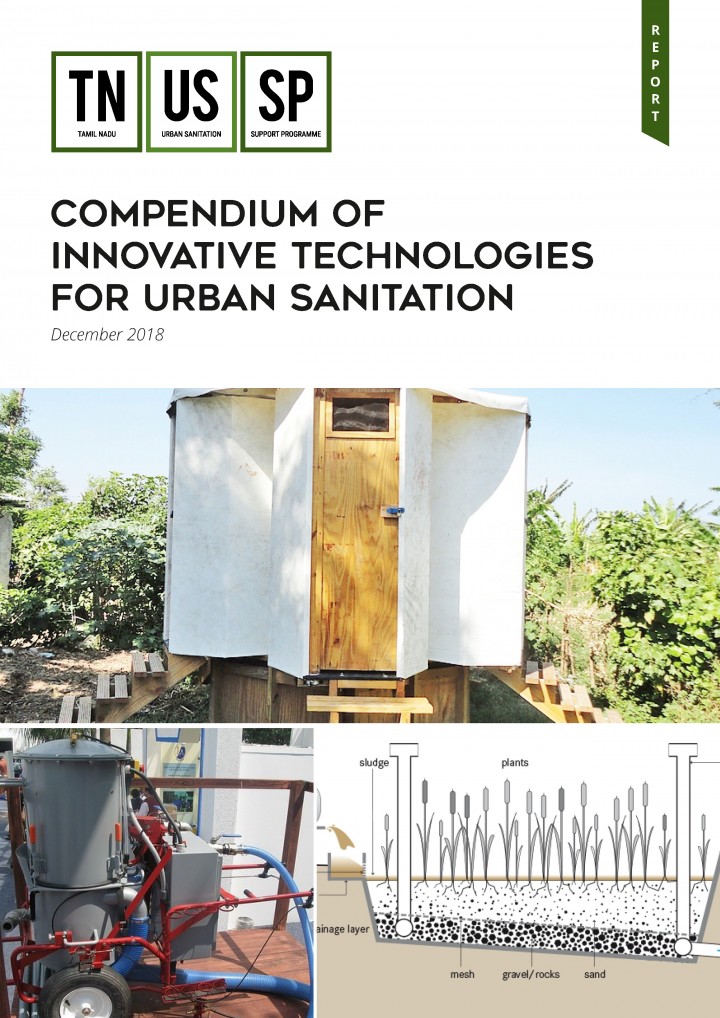
This is a Compendium of technology options for various components in the urban sanitation chain. This Compendium is contextual to the geographic and economic conditions for the state of Tamil Nadu and aims to provide the user with a broad range of innovative sanitation systems and technologies that can be implemented on the ground. This document is designed to act as a reference guide and …
2981 Views
79 Downloads
The purpose of this document is to provide practical guidance in preparedness, assessment, program design, implementation and monitoring related to Market-Based Programming (MBP) in humanitarian WASH assistance, and more specifically on:
• How to identify linkages between markets and WASH services & goods;
• How market based programming can complement and improve WASH programming;
• …
6051 Views
79 Downloads
Objectives:
To estimate exposure to faecal contamination through drinking water as indicated by levels of Escherichia coli (E. coli) or thermotolerant coliform (TTC) in water sources.
Methods:
We estimated coverage of different types of drinking water source based on household surveys and censuses using multilevel modelling. Coverage data were combined with water Quality studies that …
4386 Views
79 Downloads
From the 24 – 28 March 2014, RedR held a pilot course for 24 WASH experts on the subject of addressing the social, institutional and technical gaps that currently exist for water, sanitation and hygiene provision in the urban emergency context.
This document, produced as a partnership between ALNAP and RedR, captures the key messages, lessons and experiences of both course facilitators and …

1721 Views
78 Downloads
Ravidas Nagar is a small Low-Income Group (LIG) settlement in Bijnor City (geographical coordinates 290 9’ 0” North and 780 16’ 0” East ) in the state of Uttar Pradesh, India. It is located within Ward No. 2 of Bijnor City (the city has a total of 25 wards). As per Census of India, 2011, Ravidas Nagar was part of Ward No. 1; however, in the year 2016, it was reconstituted as a new ward. …
1897 Views
78 Downloads
For three decades the Water Supply and Sanitation Collaborative Council (WSSCC) has operated as a global, multi-stakeholder membership and partnership organization working with poor people, organizations, governments, and local entrepreneurs to improve sanitation and hygiene at scale. WSSCC has been committed to a world in which everyone, everywhere can practice safe sanitation and hygiene with …
1411 Views
78 Downloads
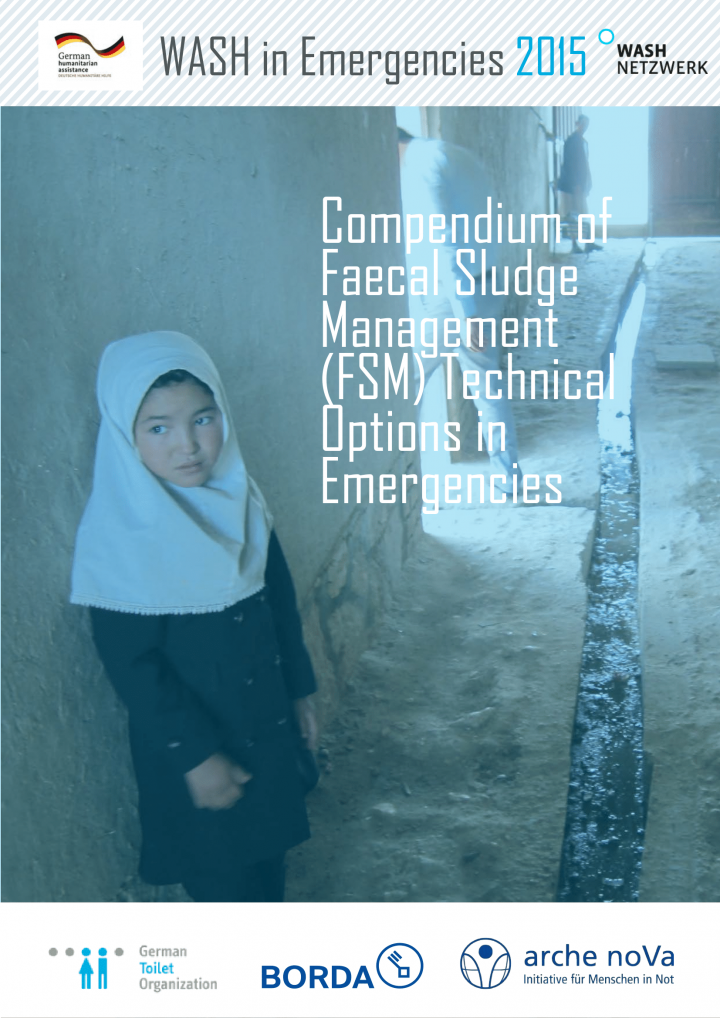
This compendium presents a range of technical options relating for collection, transport, treatment and disposal of fecal sludge in an emergency . It should be used as a guide to identify possible solutions for specific emergency situations and contexts. The final choice of options may need to combine different approaches and technologies and will depend on the phase of the emergency.
Each …
5977 Views
78 Downloads
The presentation concludes that "Portaloo" is replicable for a short term period, if a treatment plant is available for safe disposal of the sludge and if the equipment is available in country. It should not also put focus on monitoring the trucks and “hot line” or complain mechanism for the users. The presentation was held at the WECD conference July 2011 in Loughborough, England.