Sanitation Library
Total results: 4466
Searching for information on Sanitation Workers?
The Sanitation Workers Knowledge + Learning Hub is the best source for all current news, trends, articles and updates on sanitation workers rights around the world.
1274 Views
35 Downloads
Kitwe is one of the major mining cities in Zambia. The city is on the central part of the Copperbelt Province and is the third largest city in Zambia after the Capital Lusaka and the Provincial Capital Ndola. The city covers an estimated 815.76 km2. Demographically, it is also the second most populated city after Lusaka. According to the 2010 census, Kitwe had a population of 517,543 with a …
980 Views
35 Downloads
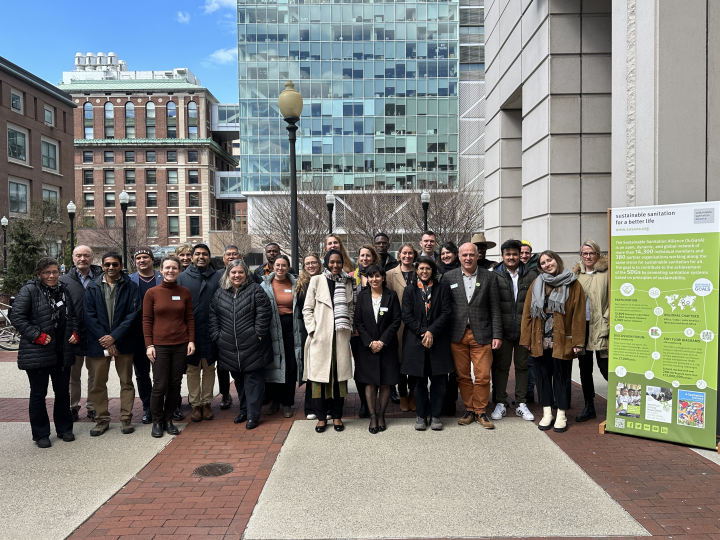
The SuSanA North America meeting took place on 19th March 2023 - right before the UN 2023 Water Conference. It was jointly organised by our Global Steering Committee Member Prof. Kartik Chandran (Columbia University) and the SuSanA-Secretariat.
This entry is the collection point of the different resources from the SuSanA Meeting, including presentations and program overview.
We once again …

990 Views
35 Downloads
This guide is for WaterAid programmes and partners, to help them understand and use community mapping as a participatory development tool.
There is already a considerable amount of experience in participatory techniques within WaterAid. They are being used to great effect in the delivery of basic servicess within both rural and urban projects, using tools such as the sanitation ladder and …
1336 Views
35 Downloads
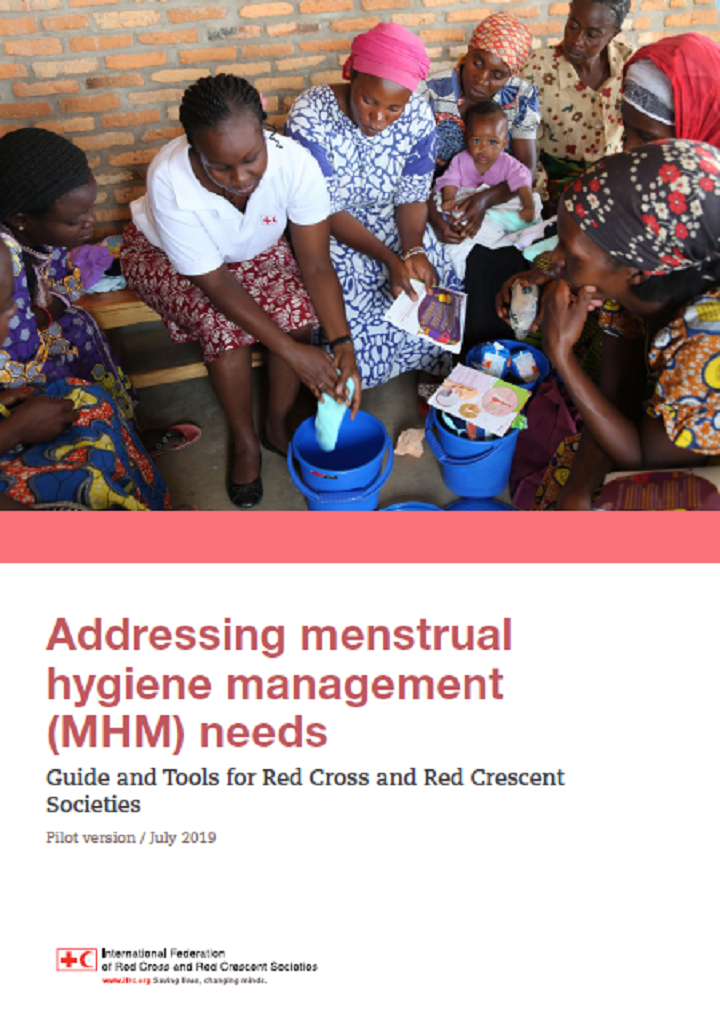
Menstrual hygiene management, or MHM, refers to a range of actions and interventions that ensure that people who menstruate can privately, safely and hygienically manage their menstruation with confidence and dignity. MHM is not only about distributing pads or providing education to girls. Effective MHM actions have three main components: i) MHM materials and supportive items, ii) Private, safe …
2250 Views
35 Downloads
The world is alarmingly off-track to deliver sanitation for all by 2030. Despite progress, over half of the world’s population, 4.2 billion people, use sanitation services that leave human waste untreated, threatening human and environmental health. An estimated 673 million people have no toilets at all and practise open defecation, while nearly 698 million school-age children lacked basic …
4497 Views
35 Downloads
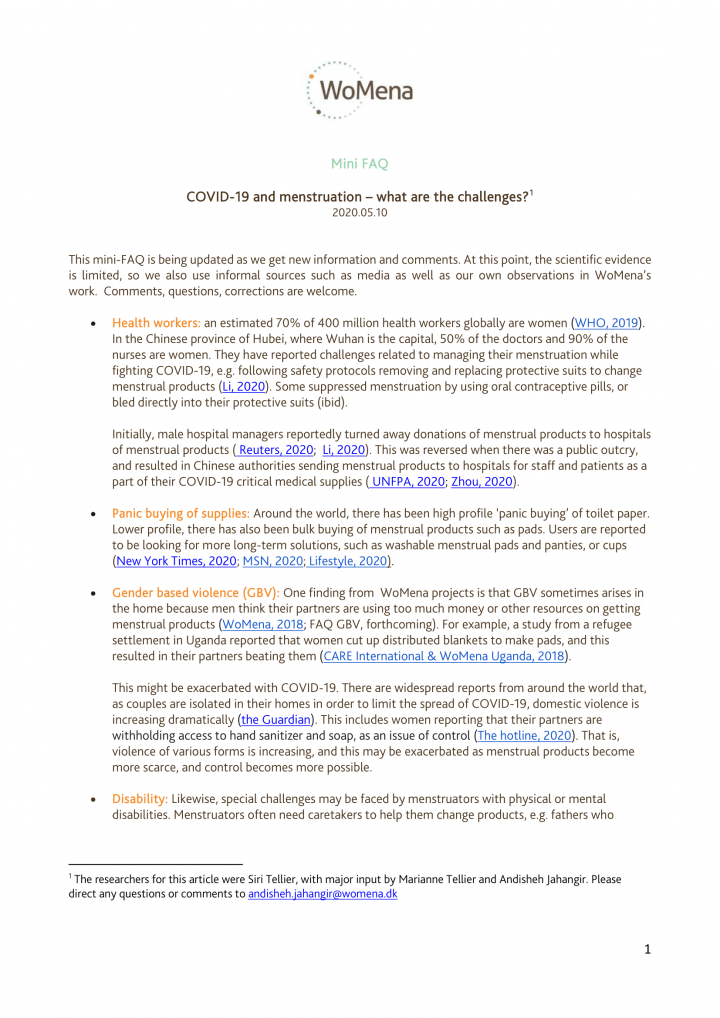
This mini-FAQ is being updated as we get new information and comments. At this point, the scientific evidence is limited, so we also use informal sources such as media as well as our own observations in WoMena’s work. Comments, questions, corrections are welcome.
WoMena’s contribution: WoMena works in a wide range of contexts in Uganda, including refugee settlements. In the COVID-19 …
1853 Views
35 Downloads
The major focus of this report is the description and critical analysis of the main
wastewater treatment processes used in Brazil. Special emphasis is given to small to
medium size communities with populations lower than 100,000 inhabitants, which
represent approximately 95% of the 5,570 Brazilian municipalities. In terms of coverage,
around 40% of the sewage generated in Brazil is treated, …
1807 Views
35 Downloads
Pit latrine linings for emergency sanitation facilities require different performance criteria from those for pits used in longer-term development work. Various international initiatives are currently under way to develop new methods of supporting the pits used for latrines in emergencies, but before a solution can be found, the problem needs to be defined. Current field guidance lacks the level …